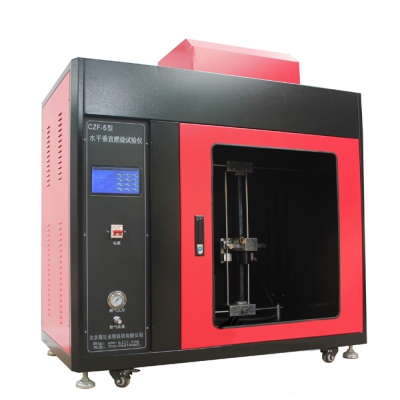
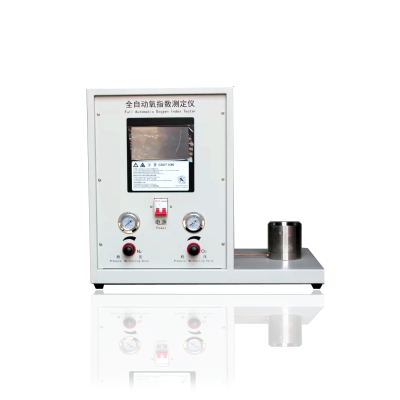
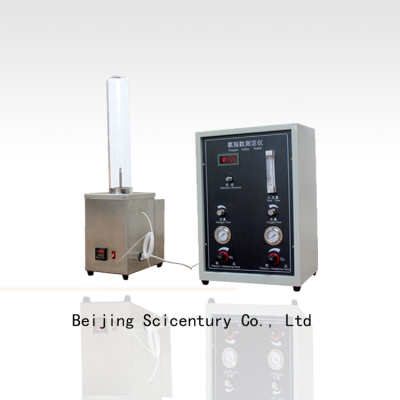
Model ZR‑EN71‑2 Comprehensive Toy Flammability Tester
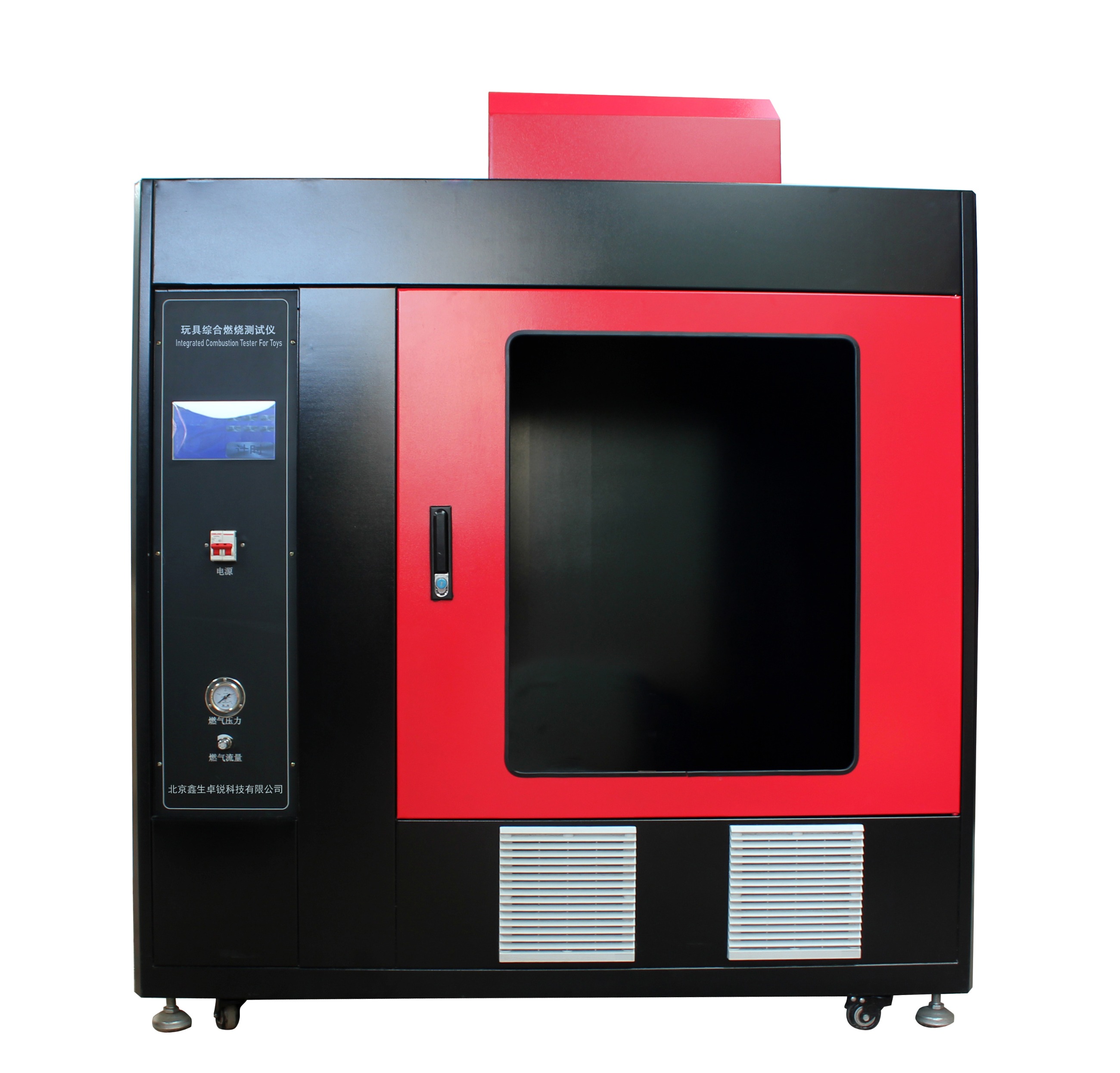
I. General Description / Scope
This comprehensive toy flammability tester is used to test the flammability of children’s toys and toy materials. It evaluates the flammable performance of toys or materials under specified test conditions. Test results shall not be used to conclude that these toys or materials are completely free of potential fire hazards when exposed to other ignition sources.
It is applicable for testing the following categories of toys:
1. Beards, moustaches, wigs and similar articles made of hair, pile or comparable materials; moulded and fabric masks, hoods, head‑dresses, flowing elements on head‑worn toys; excluding plain paper and paperboard hats without decorations or attachments.
2. Disguise costumes (toy fancy‑dress garments and toys to be worn by children during play).
3. Toys intended to be entered by children (toy tents, puppet theatres, huts, tee‑pees and play tunnels).
4. Soft‑filled toys, excluding soft‑filled items that cannot be hugged by children in play.
II. Reference Standards
This comprehensive toy flammability tester is designed and manufactured in compliance with EN 71‑2‑2020, ISO 8124.2, ISO 6941 and other relevant standards.
III. Relevant Definitions
1. The following definitions apply to this test:
1. Flammability: Ability of a material or product to ignite and burn under specified test conditions.
2. Flaming debris: Material that detaches from the specimen and continues burning while falling during testing.
3. Not ignited or self‑extinguishing within 50 mm**: The specimen ignites but extinguishes before the first marker thread is severed.
4. Self‑extinguishing: The specimen ignites but extinguishes before the second marker thread is severed.
5. Hair: Slender, flexible, hair‑like fibres.
6. Moulded head mask: Mask moulded to the contours of the head or face.
7. Soft‑filled toy: Toy, with or without clothing, whose main surfaces are soft and filled with soft material, so that its main body can be freely compressed by hand.
8.Toy disguise costume: Garment intended for children to wear for imaginative role‑play, allowing them to pretend to be a character.
9. Toy intended to be entered by a child: Toy made from fabric and/or polymer sheets and films, designed to enclose a child fully or almost fully on all sides.
10. Surface flash: Rapid flame spread across a material surface without igniting its base substrate at the same time.
11. Washing: Process for cleaning textiles designed to be laundered in water baths.
12. Within 50 mm**: Self‑extinguishing within 50 mm from the point of flame application.
13. White cotton thread**: Mercerised white cotton thread with maximum linear density of 50 s count (supplied by user).
IV. Instrument Description
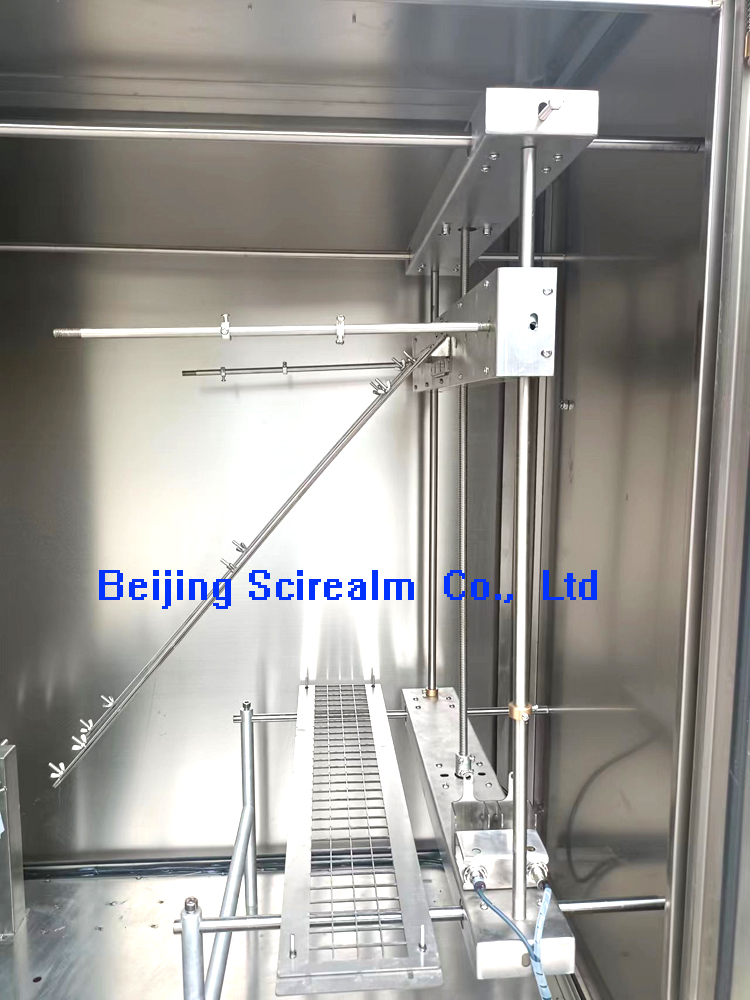
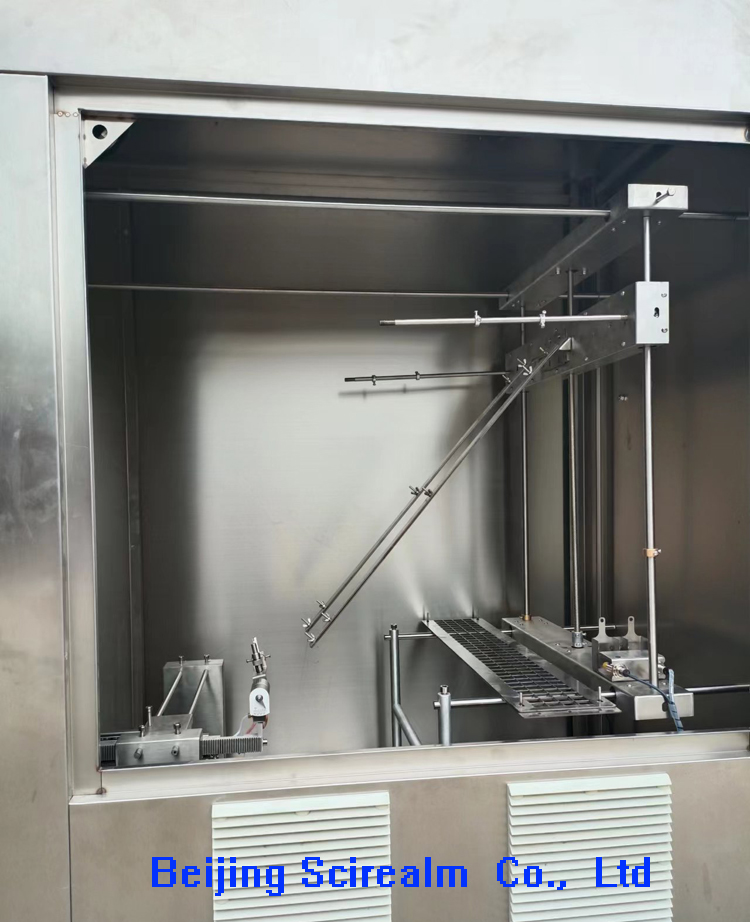
1. Bunsen burner: Flame generator; rotatable for vertical / 45° positioning, flame colour adjustable, movable forwards and backwards.
2. Angle dial: Facilitates observation and adjustment of burner angle for fixture positioning.
3.Type‑1 specimen rack: Fixture for mounting marker threads and holding specimens during testing.
4. Specimen rack: Assembles specimen clamps for different tests; vertical travel controlled via touch‑screen.
5. U‑shaped specimen holder**: For testing head‑worn toys, hoods, head‑dresses, fabric masks partially or fully covering the face, toy disguise costumes and toys intended to be entered by children.
6. Vertical metal frame: Supports vertical and horizontal displacement of the specimen rack.
7. U‑shaped specimen holder with mesh grille**: Used for narrow‑strip specimen testing.
8. Weight and proximity switch: Marker‑thread ends are attached to weights; automatic sensing and timing trigger when marker threads break.
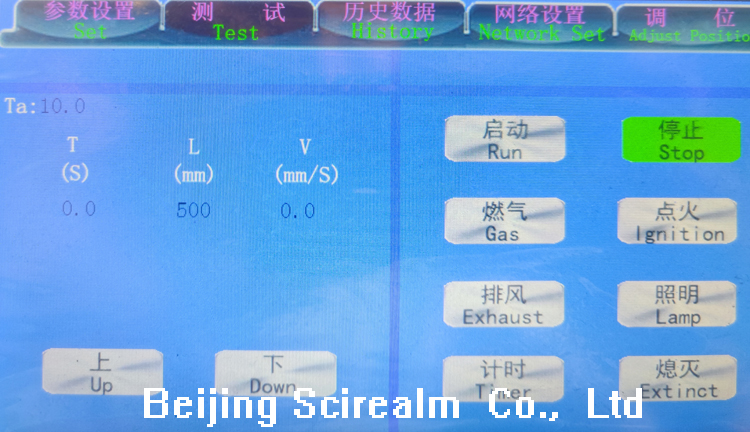
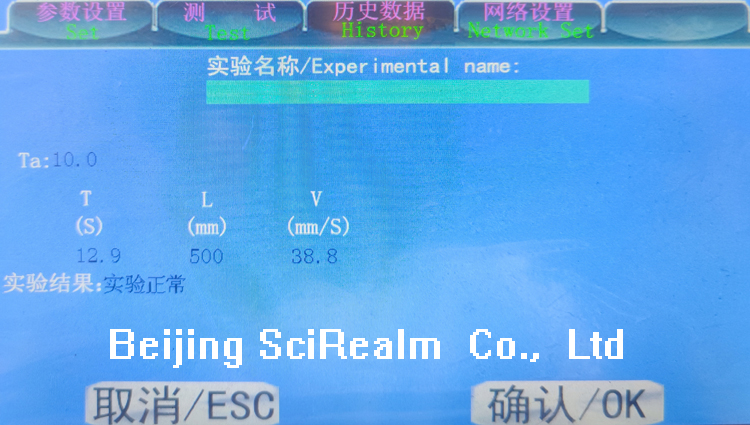
9. Touch‑screen display: Controls test operation and displays test duration and other data.
10. Power switch: Main power on/off control for the instrument.
11. Pressure gauge: No pressure reading during testing is normal operating status.
12. Flow control valve: Regulates gas flow to adjust Bunsen‑burner flame size.
V. Technical Parameters
1. Ignition‑time setting range: 0 ~ 999.9 s
2. Combustion‑timing range: 0 ~ 999.9 s
3. Burner nozzle angle: adjustable from 0° to 45°
4. Test flame height: 20 mm / 40 mm
5. Inner frame dimension of U‑shaped holder: 80 mm × 600 mm (mesh size:18 × 19.3 mm)
6. Marker‑thread positions on U‑shaped holder:
First marker thread: 50 mm above holder bottom;
Second marker thread: 250 mm above first marker thread;
Third marker thread: 500 mm above first marker thread.
Combustion gas: Butane or propane gas.
7. Overall dimensions (W × D × H): 1320 mm × 680 mm × 1520 mm
8. Approximate weight: 110 kg
9. Power supply: AC 220 V±10 %, 50 ~ 60 Hz
VI. Operating Conditions
1. Ambient temperature: 0 ℃ ~ 40 ℃
2. Relative humidity: ≤ 85 %
3. Supply voltage & power rating: 220 V±10 %, 50 Hz, 100 W
4. Gas pressure: 0 ~ 0.3 MPa (adjustable)
5. Environmental & test requirements: Avoid strong direct or reflected light shining onto the instrument during operation. After 90 min of continuous testing, shut off gas supply and allow the instrument to cool for 15 min.
6. Ambient airflow: No forced air movement during operation.
7. Tests shall be performed inside a fume hood.
VII. Instrument Structure
The instrument consists of two main assemblies: test chamber and control unit.
Test‑chamber assembly: On left‑ and right‑hand side panels are power switch, safety indicator switch (backlight switch), gas‑regulating device and exhaust‑fan control switch.